Dancing With the Trouble
"Welcome to the Liminal Realm"

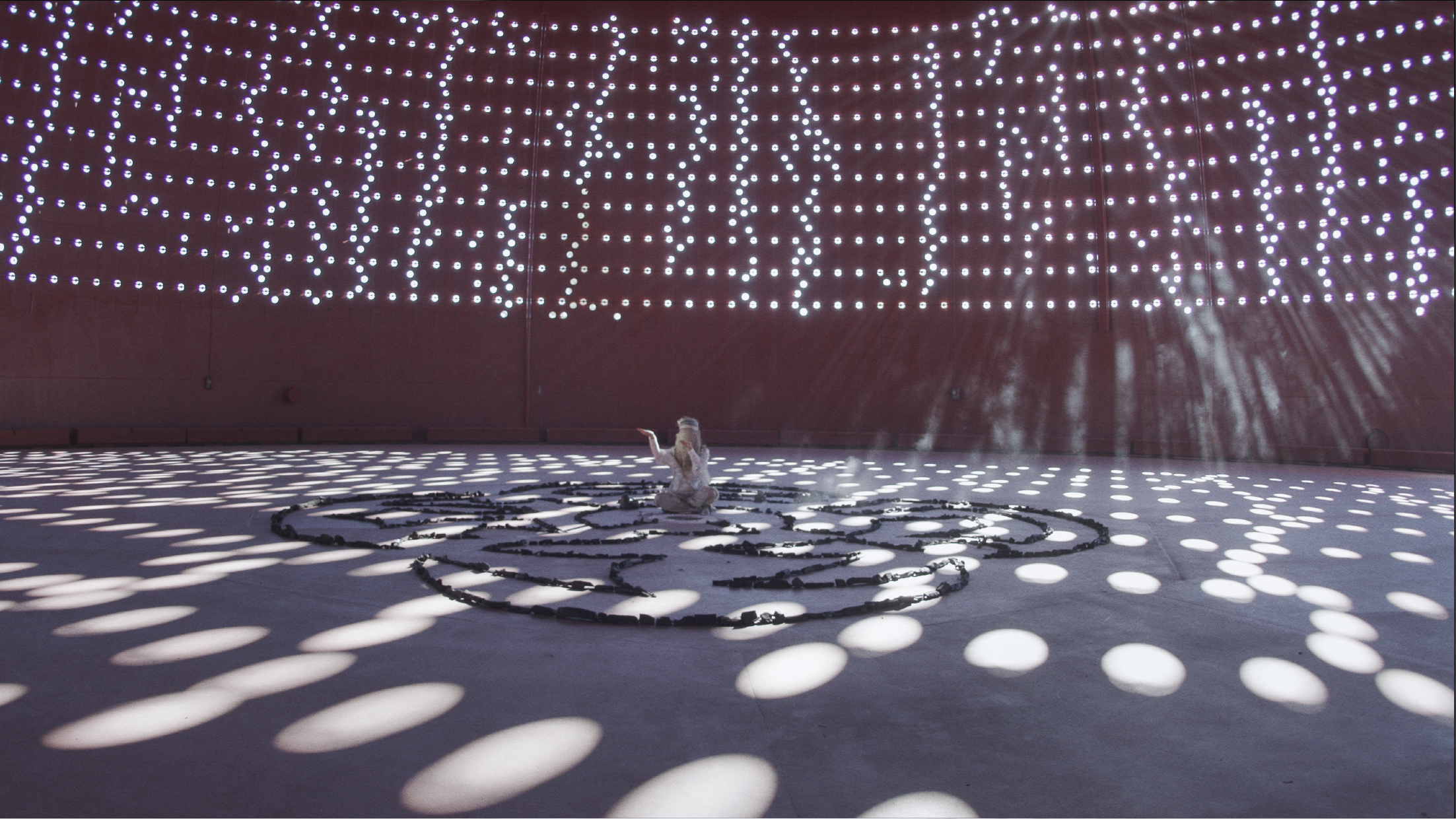
Guess what, I’ve been away for a year, despite my determined intention to publish consistently, and despite the urgency to catch-up with the front line of my thinking, from an introduction to futures worldbuilding to where I stand now. I often compare the permanent unfinishedness of my creative expressions to mise en place stuck in the fridge forever, sitting untouched in unpublishable form in different cloud drives, or worse, slowly disintegrating in the compost heap inside my mind. But with every passing year, picking up the thread it feels like my thoughts haven’t just sat there; they’ve been metabolizing. In popular discourse, cultural artefacts addressing the future either age like raw milk1 or like fine wine. But as our everyday reality and the topics addressed in my work are increasingly converging, I would rather compare its aging to a fermentation culture, like kimchi or certain cheeses, that are consumed as the ripening process continues, and which’ flavour does not necessarily become ‘better’ or ‘worse’ over time, but keeps changing in contact with the environment. In this light, getting back to a series of projects that I worked on in 2019-2022, right through the COVID-19 pandemic and into the war in Ukraine, is revisiting just as much as it is a belated catch-up. And, boy, has it fermented…
The Inner Land
To look beneath the surface of futures worldbuilding is to shift from the outer world space (the physical environment, technology, social norms and politics etc. of an imaginative future society) to the inner subjective space (fictional characters’ affective responses to and personal perspectives on their world) and symbolic space (deeper, timeless human themes and subconscious dimensions that go beyond the fictional) realms. Rather than seeing different future worlds purely as external systems, they can be understood as archetypal mentalities, which we can increasingly come to inhabit—or rather, which can possess us, taking control of our choices from within. In 2021 this became the core focus of our research.
Not least we were inspired by witnessing the COVID lockdowns fracture and reshuffle the cultural-political landscape. They acted as a centrifuge, spinning society into different, mutually exclusive realities. People weren’t just arguing about masks; they were fighting from within different future timelines: one of collective techno-triumphalism, another of existential survival and systemic distrust. In ‘Tending Ambitopias’, I addressed the looming friction between initially aligned, yet increasingly diverging value paradigms that always tacitly co-exist in organisations, political movements and subcultures as temporary alliances around a commonly shared goal. They operate as latent, personally held mythologies about hopeful or frightening futures, drawn from our cultural environment. These often remain unspoken, until a critical situation suddenly prompts them to effect vastly different choices and outcomes.
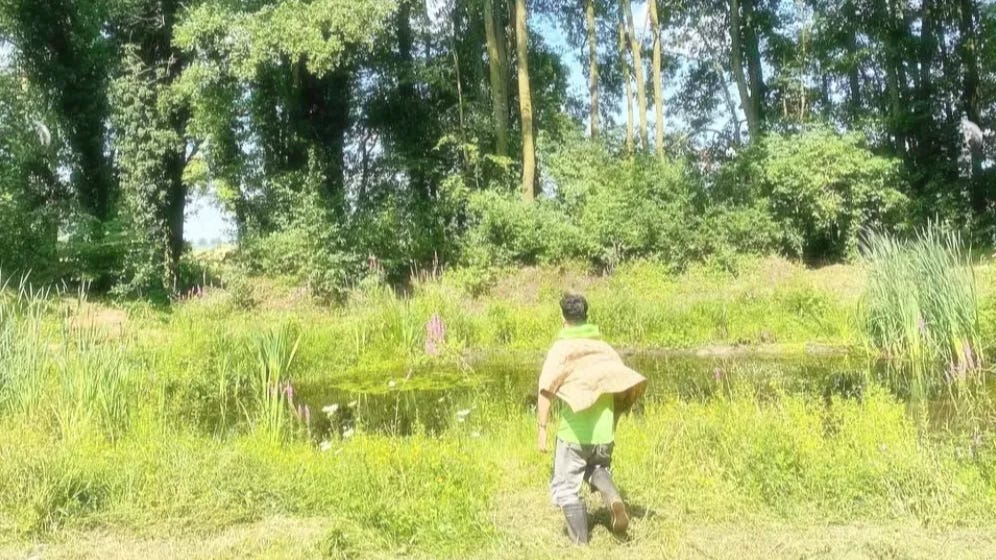
A good friend of mine (my previous manager and now my job-coach) once experienced one of the best examples of this. After quitting her job as a manager as well as her rented flat (throwing herself into the unknown), she spent a while working for room and board on a derelict plot of land that had just been bought in the Dutch countryside. For the owner, the place was eventually a business—a conscious one indeed, but at the end of the day fully participating in the general economy, sustaining itself by renting out cabins, caravans and tree-houses as well as hosting organised retreats. For my friend, the business aspect was secondary to its social function: allowing people to simultaneously work on their own lives and work the land through hands-on practice. For yet another person, one of the more experienced food foresters, the place had a primarily ideological function, as a future self-sufficient off-grid hideout against political-economic calamity. For most of the time, these differences were largely unspoken and seemingly aligned, subordinate to the shared goal of developing the land from an abandoned wasteland into a little paradise. But only once the long-term vision had to be addressed explicitly, tacit friction between these different stories came to the surface. In other words: the project held different possible futures, all motivated by a utopian impulse, yet at the same time driven by critically different value paradigms.
In this example, everyone involved knew more or less where they stood and what they needed from the project. But most people, especially when growing up or going through a period of searching for themselves, do not. In every environment we inhabit, especially in the digital realm, we are surrounded by an arena of different stories—possible inner futures, each with their own demands and logic—competing for dominance of our mind. You could say that these different futures are actively affecting us, as if from another dimension, using us to bring themselves into existence. Appropriately, the project is called ‘Het Binnenland’, a Dutch wordplay, simultaneously meaning ‘deep in the country side’ and ‘the inner land’ (if you are inspired, please come visit!). This is precisely the concept we had begun to address: “if we wish to plant and cultivate different futures, we must first learn to navigate and work the inner land.”
Filming the In Between
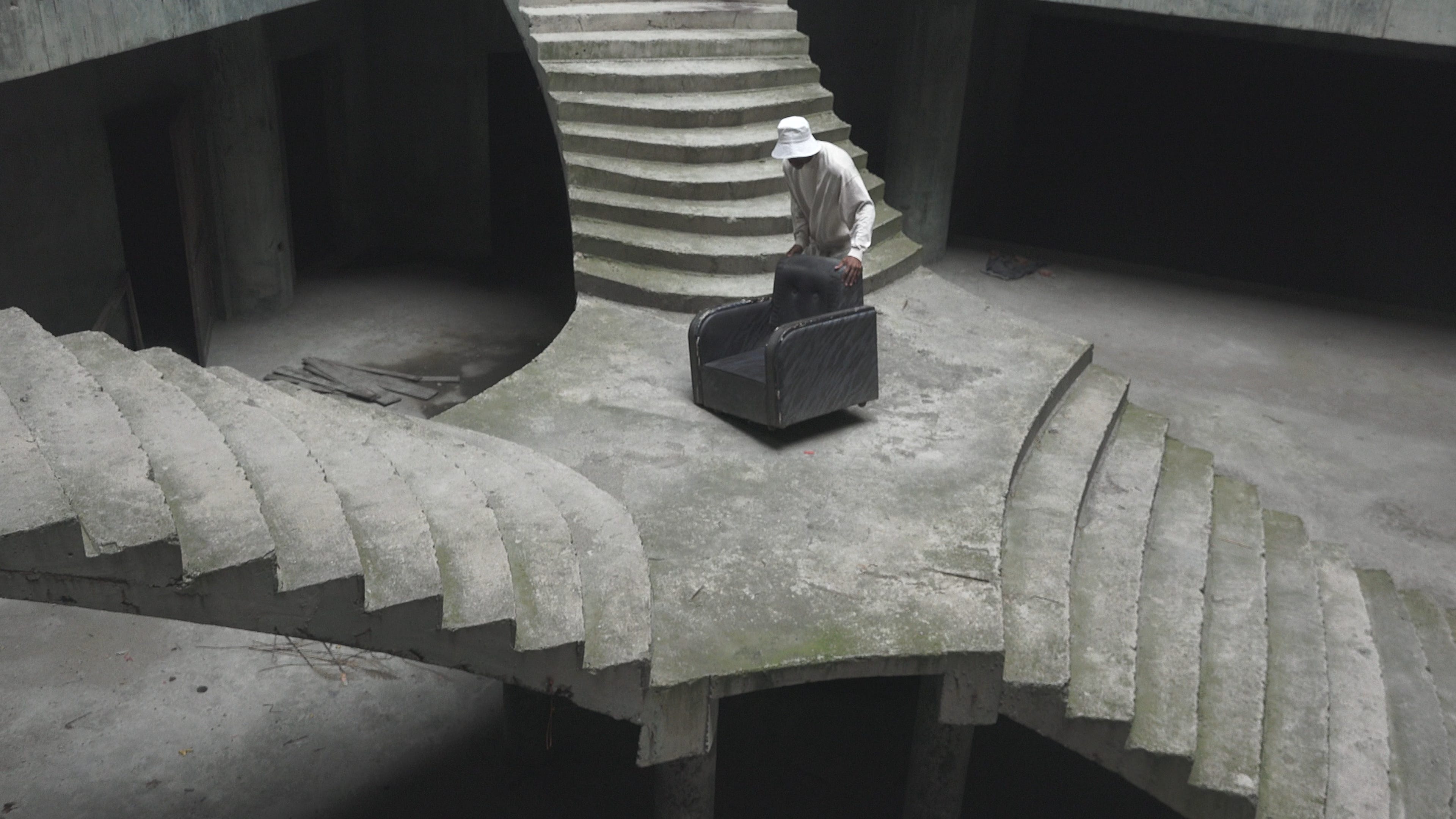
For a while, Emilia was stationed at Jan van Eyck Academy in Maastricht. This southernmost city of the Netherlands is sitting on its own inner land. Beneath its streets lies a sprawling labyrinth of Roman-era limestone tunnels, like a subterranean nervous system—their hidden entrances scattered across the land, in and outside of the city. In more recent times, nearly a century long of industrial mining has carved out a characteristic quarry landscape—since a few years a protected conservation area— which has exposed several preexisting tunnels that now come together onto this new, strange basin. This is where the ‘Liminal Realm’ appeared to us: a world between worlds inside of ourselves.
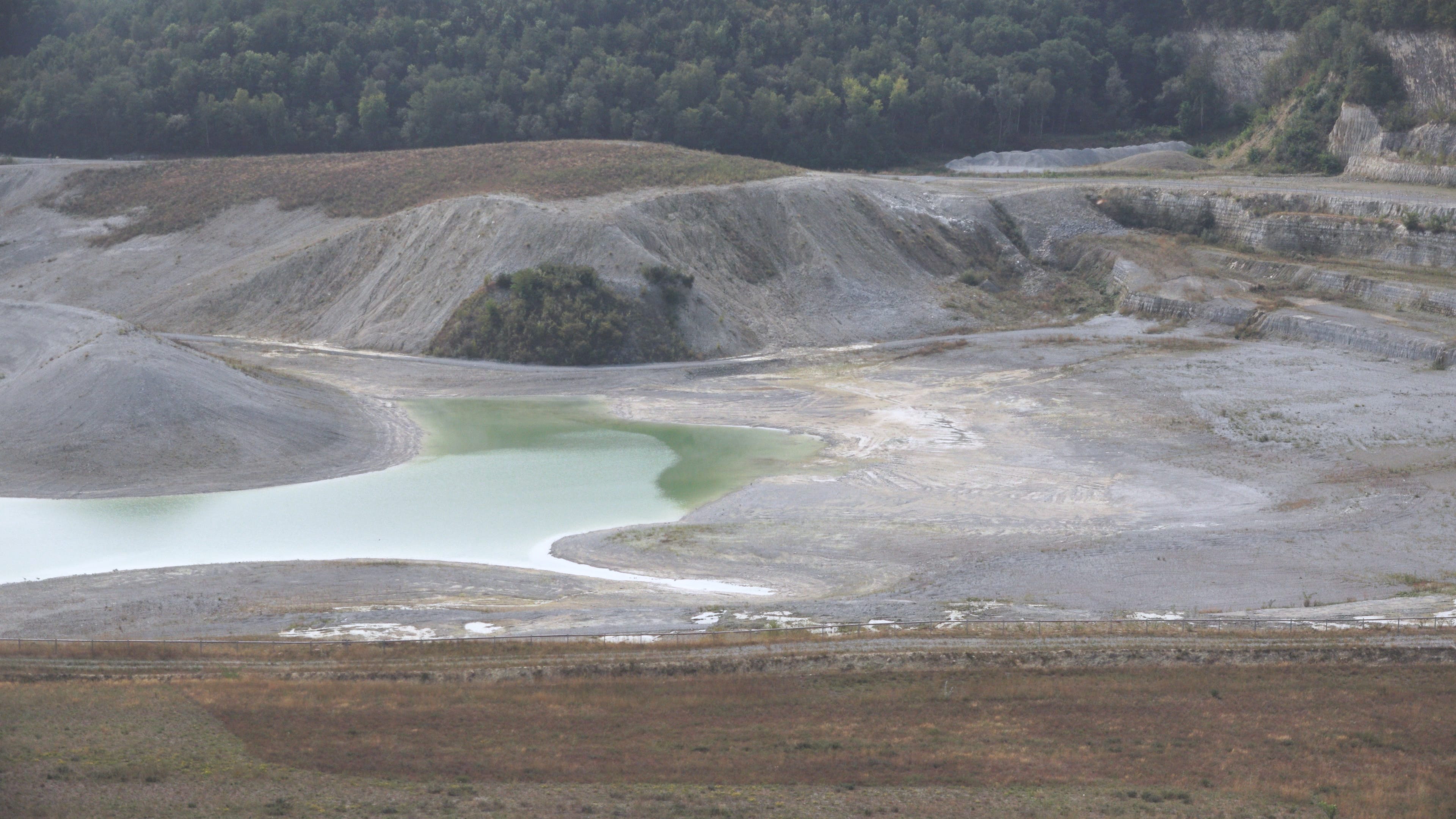
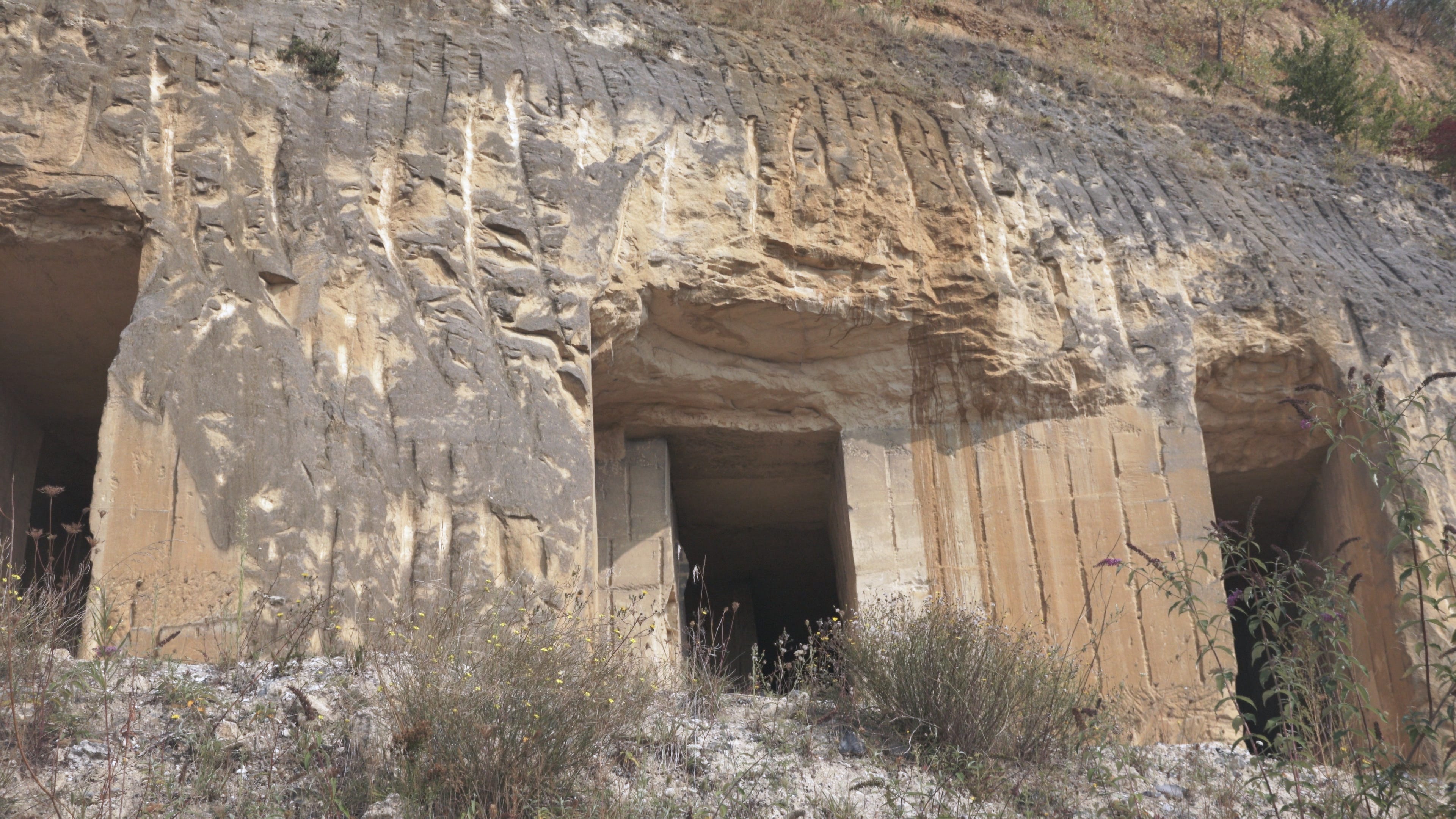
Of course the idea of depicting the symbolism of inner change through the use of transitional spaces is nothing new. ‘Liminality’ is an important concept in fields like anthropology, religious studies and film criticism and has received ample attention in recent years, especially as a result of the niche popularity of ‘liminal space’ as an internet aesthetic: grainy, hazy photos of deserted hotel hallways, hospital corridors, or road junctions. These spaces are meant to guide people from A to B, not to be lingered in. Without people, they feel unsettling, like something seen in a dream.2 The word stems from the Latin limen, which means threshold. But change is rarely a simple doorsill. More often, it’s a waiting room or a complex hallway with many doors, none of them labeled.
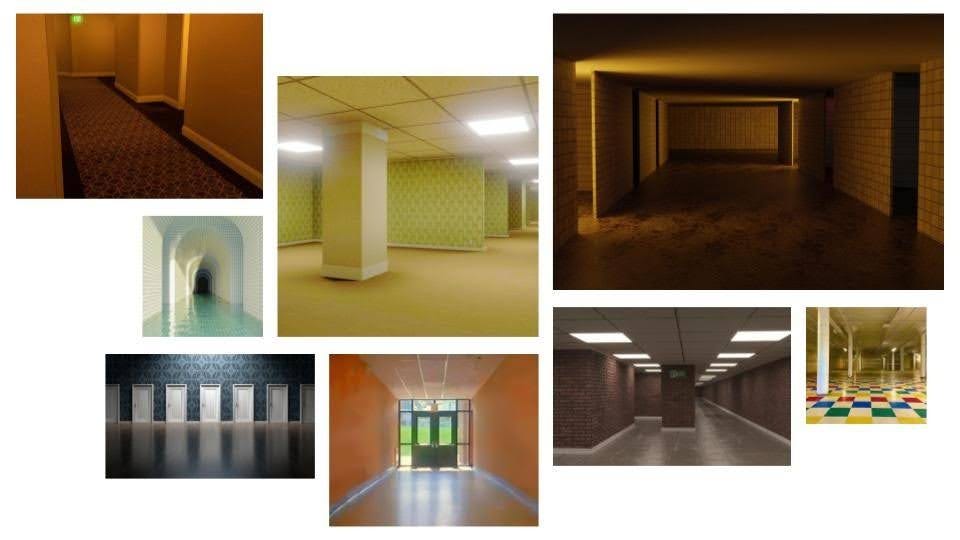
Together with Louisa Teichmann (and other Roodkapje affiliated artists in 2021), we made this meditation soundscape to help you tune in to your own Liminal Realm
The Maze in the Machine
The ancient art of visualisation often begins with an imaginative descent into the subconscious: down a flight of stairs, through a long, quiet hallway and finally towards a tiny door. Many kinds of mind-body practices, as diverse as breathwork and Kung Fu, do something similar: they guide to a point where the analytical mind loosens up and gives way to deeper motifs. They are threshold practices: ritual entries into the inner land. In the words of Rolando Toro, the founder of Biodanza (which I have practiced for several years), “we all have an inner Minotaur, trapped inside the maze of our existence.” Value paradigms act as a red cloth to this Minotaur. They are narratives that captivate us because they trigger and activate the beast, harnessing its raw, instinctual energy to power their own momentum. Like a Spanish bull-run through the corridors of our psyche, a paradigm steers the Minotaur deeper and deeper into a specific corner of the maze until we are trapped within its logic. This is where the seed of a possible future takes root, long before it manifests in external reality.
Liminal Vision’s artistic research work translates this process into cinema. We represent this internal navigation as movement through a symbolic space—an interface between the protagonist and the affective influence of a potential, “becoming” world. In our cinema, the abstract friction of competing futures often manifests in the form of archetypal characters that embody these value paradigms. By interacting with these figures, our main characters experience the affective lure of possible futures in a direct and visceral way. As I noted earlier, we are already surrounded by an arena of different stories competing for dominance of our mind—a conflict that has migrated almost entirely into the digital realm. The internet has become our collective subconscious “in silico”: a sprawling maze of desire paths carved by the repeated treading of our shared anxieties and longings. It is a mycelial architecture where ancient archetypes wear the mask of modern memes, acting as the “toreros” of our libidinal attention, baiting our instincts to lead us into increasingly incompatible versions of reality. We are at a junction where these algorithmic bubbles are beginning to drift apart, becoming the nursery beds for different future societies that reorganize the physical world in their image.
(The) Scent of Time
The question remains: how to maintain a sense of personal sovereignty, while being pulled through the slipstream of a collapsing order and into the orbit of these competing, emergent futures? This inquiry sits at the heart of our film, Scent of Time (2022), a 29-minute fiction film and hybrid dance performance that serves as a prequel to the worlds of Embodied Ambitopias. The film follows the journey of Vlada, a young Ukrainian girl who was forced to leave her home near the Black Sea after a political crisis and move in with a mysterious family friend called ‘A’, who lives a shadowy life in a peripheral city in East Europe and is responsible for her safety. From this position, Vlada navigates the friction between her life as an upcoming XR performance talent and the harsh reality of survival in a strange and dangerous world.3 Rather than a warm, paternal protector, ‘A’ represents the Trickster archetype—a dark masculine, simultaneously safe and dangerous figure, operating outside conventional societal rules. In Jungian terms, he acts as the Animus: her volatile guide into “a monstrous world where nothing resists cunning but more sophisticated cunning.”
This cinematic exploration of navigating the unknown is a direct dialogue with the work of the Korean-German philosopher Byung-Chul Han. In his influential work The Scent of Time: A Philosophical Essay on the Art of Lingering (2017), Han contrasts the “scent” of East-Asian incense-based time-keeping with the Western mechanical clock. He argues that we are living in a state of dyschronia, where time has shattered into a sequence of hurried, atomized “nows.” In this state, we lose what he calls the “art of lingering”: the ability to inhabit a moment long enough for it to bloom with meaning.
This dyschronic rush reflects what Adam Curtis calls Hypernormalisation. When a value paradigm, such as the relentless productivity of consumer capitalism, becomes all-pervasive, it ceases to look like a “choice” and begins to look like the only possible reality. Its absence becomes unthinkable, even when failing most of us. Hypernormalisation creates a world that feels increasingly surreal and hollow, yet we are forced to act as if it were perfectly functional. To keep this fragile illusion from collapsing, the system demands we stay in constant motion. We are hurried from A to B precisely so we don’t look too closely at the hallways.
In our film, we treat the ‘Liminal Realm’ as a site of conscious “noclipping” out of hypernormalised reality. If these transitional spaces are designed to merely guide us through, we choose instead to linger within them. Choosing to linger in the inner labyrinth is an act of resistance against the pressure to be consumed by any single paradigm. It means standing still, holding our cognitive dissonance and refusing the “bull-run” provoked by the red cloth of any designed system. This is a frightening practice because it requires us to meet our inner Minotaur. Yet, by embracing this open-endedness, we can reclaim our sovereignty. We allow the waiting room to become a rich soil where new, previously unthinkable futures can finally regain their scent.
“Scent of Time” (2022) | Trailer
Breaking the Fourth Wall
Warning: the following section contains spoilers about the film ‘Scent of Time’
In Scent of Time, Vlada’s journey is a descent through four psychological stadia that simultaneously reflect the troublesome coming of age of a teenage girl under extreme circumstances and mirror the collapse of a hypernormalised world.
We begin in Innocence, where Vlada is immersed in the frictionless digital promise of the XR metaverse—a literally virtual, limitless world that has not yet demanded an emotional price. In contrast stands ‘A’, the dark Trickster whose shadowy underworld existence is defined by constant alertness and the quiet knowledge that his time is running out. At this stage, the virtual dream and the harsh physical reality are two entirely separate planes of existence.
The transition to Curiosity begins when Vlada notices ‘A’s’ cryptic game board. He explains that its distinct fields represent different realms of life, each governed by its own internal logic, warning her that a single misstep will make “them”—the invisible powers behind the system—notice you. Throughout this navigation, Vlada is caught between two guiding inputs: the cold, subverting voice of ‘A’ teaching her the rules of survival, and the warm, deep voice of an old woman awakening her inner, ancestral feminine wisdom.
As Vlada moves into the Crossover, a form of “noclip” occurs. She begins to wander off the map in her dreams, dipping her toe into the frightening harshness of the real world. Yet, she is no victim; the ancestral voice counterbalances ‘A’s’ tactical nihilism, inviting her to “dance in the woods with the howling wolves.”
This culminates in Total Liminality. At a desolate gas station, ‘A’ suddenly disappears for good, by the hands of an invisible enemy that had been lurking in the background all along. Vlada experiences a terrifying transcendental moment of synthesis. She understands that she needs to combine ‘A’s’ “dark cunning” with her awakening inner sovereignty. She finds the strength to survive because she has, just in time, learned to integrate both voices. Life has forced her to become an adult far too young.
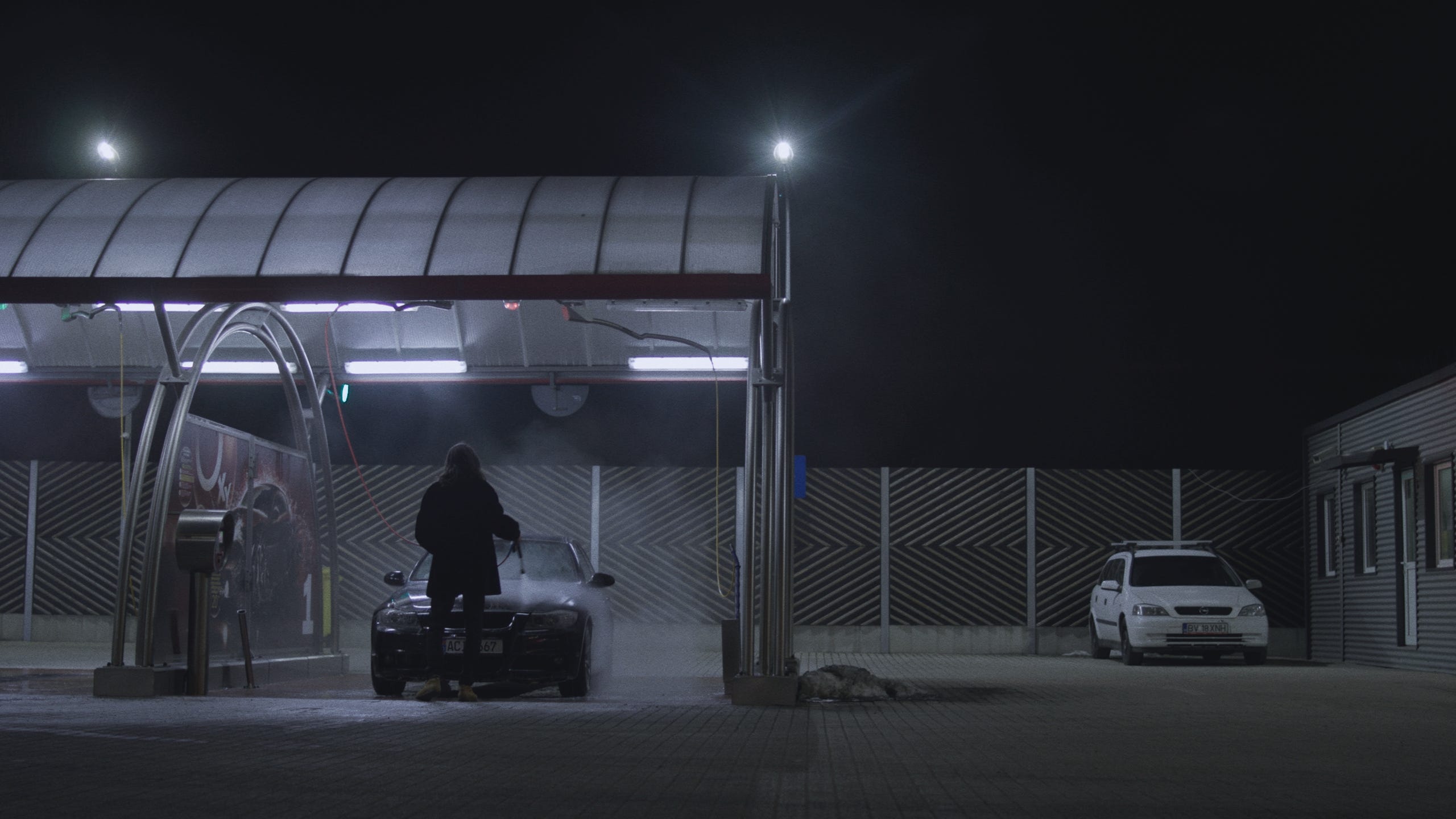
A central scene symbolises this total collapse: two men break into the apartment and, with a silent, heavy finality, toss over the King on the game board. In the narrative world space, this is a threat to ‘A’—a message that his days are counted. But, symbolically, it can also be seen as the end of established order—whether that order is the anchor of ‘A’s’ protection in Vlada’s life, or the fragile durability of institutional stability and peace in Europe.
In February 2022, as we were filming this very story, Russia invaded Ukraine. Our lead actress, Polina, who co-shaped Vlada’s character over years of collaboration, suddenly became exiled herself. The cinematic production process became an exercise in meaning-making in real-time—a way for each of the people involved, each from their own more or less affected position in the conflict, to relate to existential threat and the critical necessity of preserving sovereign inner land that no external force, no matter how violent, is permitted to co conquer.
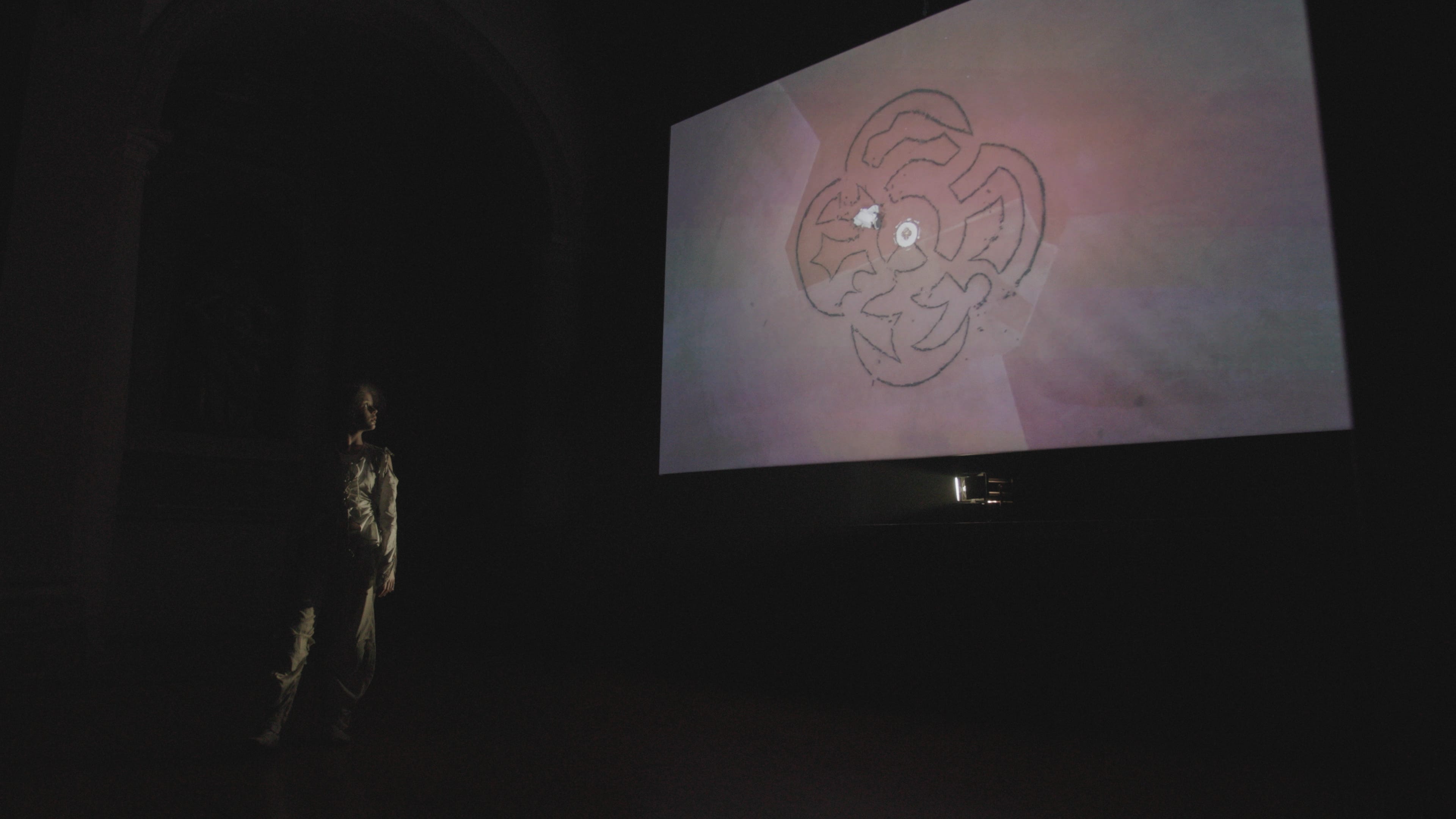
“У мене немає дом” (I don’t have a home), by Ukrainian indie band Один в каное
Dancing in the Backrooms
Almost 10 years later, it is hard to imagine that liminal spaces only emerged as an internet aesthetic as recently as 2019—ignited by “The Backrooms,” which became the trend’s defining example. In the first years, the uncanniness of “strangely familiar places” was an obscure fascination for internet culture nerds like myself.4 But the COVID-19 pandemic shifted something. As an entire generation found itself trapped online, forced to come to terms with a world that felt perpetually on standby, liminal spaces suddenly resonated much more broadly. On the one hand, numerous video essays appeared on YouTube, analysing the psychological effects or philosophical implications of the shared emotional experience evoked by liminal spaces. On the other hand, the ever-extending Backrooms lore with its endless ‘levels’ and entities reached mainstream levels of attention, becoming a banal, creepypasta-style form of modern horror folklore. The Backrooms going mainstream, culminating in a film adaptation this year, may have stripped the original aesthetic of its poetic quality. Yet, it was precisely this memefication that allowed the liminal space aesthetic to imprint itself onto the psyche of a generation. Every twelve-year-old today knows what the Backrooms are. For the older Gen Alpha and younger Gen Z, the vast maze of tunnels underlying our everyday world has become a familiar place.
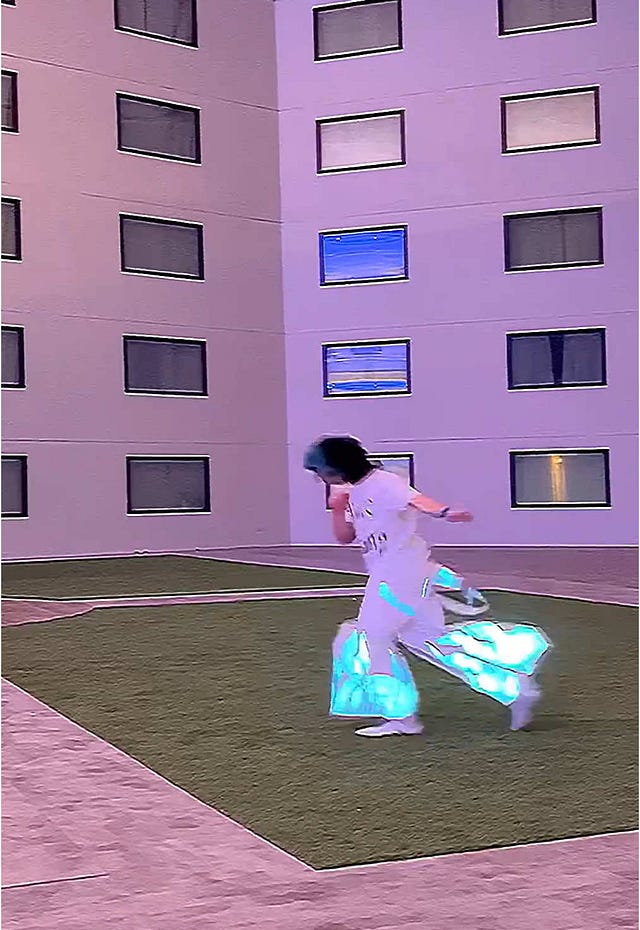
In the last two years this familiarity has taken a new turn: we see TikTokers and Roblox players lightheartedly dancing, not just in the Backrooms, but in dead malls and other liminal spaces. I can’t help but feel that there is more to this (yes, that it is actually that deep). I think people intuitively begin to understand something profound: they are learning to hold the discomfort of our turbulent times to “stay (and dance) with the trouble.”5 To dance in the backrooms is to enact the ultimate “art of lingering.” If the future is a maze, then the most radical act of sovereignty is not to find the exit, but to have fun inside.
 Tiktok failed to load.
Enable 3rd party cookies or use another browser
The talented, trailblazing hybrid pop artist Romance Planet ignited the “Dancing in the Backrooms” trend by shuffling in dead malls and other liminal space locations to his own music.
Romance Planet’s 00s hardstyle inspired track “Fall From the Sky” has become synonymous with the “Dancing in the Backrooms” trend on Roblox.
“Looping the Rooms” by Japanese vocaloid pop producer Rusino, featuring Hatsune Miku, is another niche-popular track referencing the Backrooms, often accompanied by a playful approach to the dread of the liminal
Further reading
Futures Worldbuilding and the Shift to “Inner Landscapes”
Inayatullah, S. (2007). Questioning the future: Methods and tools for organizational and cultural transformation (3rd ed.). Tamkang University Press.
Polak, F. (1973). The image of the future (E. Boulding, Trans.). Elsevier Scientific Publishing Company. (Original work published 1955)
Time, Dyschronia, and Hypernormalisation
Han, B.-C. (2017). The scent of time: A philosophical essay on the art of lingering (D. Steuer, Trans.). Polity Press. (Original work published 2009)
Crary, J. (2013). 24/7: Late capitalism and the ends of sleep. Verso.
Fisher, M. (2009). Capitalist realism: Is there no alternative? Zero Books.
Rosa, H. (2013). Social acceleration: A new theory of modernity (J. Trejo-Mathys, Trans.). Columbia University Press. (Original work published 2005)
Liminal Spaces, the Subconscious, and Internet Folklore
Augé, M. (1995). Non-places: Introduction to an anthropology of supermodernity (J. Howe, Trans.). Verso. (Original work published 1992)
Bridle, J. (2018). New dark age: Technology and the end of the future. Verso.
Fisher, M. (2016). The weird and the eerie. Repeater Books.
I would argue this applies not only to most scenarios from professional forecasters but also to most works from the speculative futures worldbuilding trend in the contemporary arts and design over the last 5 years (conspiracy theorists have a remarkably better track record).
A lot more can be said about the architecture, psychology and nostalgia of liminal spaces in contemporary culture, but my focus remains on their effectiveness to symbolically represent transitional infrastructure between different inner worlds and, by extension, different possible futures.
Throughout the film, Vlada is preparing for an admission exam that will determine her future as a hybrid pilot of semi-autonomous drones—animal-inspired forms of all kinds kinds: eel-shaped for deep-sea exploration, quadcopters for aerial surveillance, quadruped for rough terrain, etc.
The same could be said about internet (“core”) aesthetics in general, which emerged in the underground of websites like Tumblr and Pinterest as an “conceptual archiving” kind of way of relating to content found in the vastness of the digital void. COVID-time TikTok however brought aesthetics into the mainstream as a way of identity construction and branding for the shortform video age, replacing earlier formats of subculture or artistic movement.
In Staying with the Trouble: Making Kin in the Chthulucene (Durham: Duke University Press, 2016), Donna Haraway argues against both naive optimism and cynical despair in times of planetary crisis. Instead, she advocates for “staying with the trouble”: learning to be truly present and creative within messy, unstable, and deeply compromised transitional epochs rather than frantically looking for an impossible escape.
The Minotaur as a leitmotiv invokes too the Labyrinth. A good classic Labyrinth film is l'Année dernière à Marienbad, which, playing out mostly in the hallways of an ornate baroque hotel, can certainly be ascribed a degree of liminality.
@BOUNDARY OBJECT
Thank you for sharing this.
What resonated with me most was the idea of the "Inner Land."
Over the years I have discovered that before we can build new infrastructure in the physical world, we first have to build it in the mind. Every invention, every community, every movement, and every future begins as an idea that people choose to nurture rather than abandon.
I particularly enjoyed the example of transforming neglected land into something meaningful. It reminded me that many of the greatest projects start with people carrying different visions, yet finding enough common ground to work together toward something better.
The future is not always a straight road. Sometimes it feels more like wandering through a maze, learning as we go, adapting, and discovering possibilities that were invisible when we started.
What stood out to me throughout the article was the importance of maintaining personal sovereignty while navigating uncertainty. In a world increasingly pulling people in different directions, that may be one of the most valuable skills we can develop.
For more than twenty years I have been exploring similar questions through technology, infrastructure, community building, and the challenge of creating practical alternatives that help people become stronger and more resilient.
Thank you for taking the time to explore these ideas. Conversations like this help people realise that the future is not something that simply happens to us.
It is something we actively participate in creating.
MJ
P.S. If these themes resonate with you, come and join the conversation. There are many of us exploring what a better future could look like and, more importantly, how to build it.